
What we intend through the experience is to encourage one to revisit these narratives around food and food histories so that not only our minds, but also our bodies can re-engage somatically with re-centring agency, justice and meaning around the question: ‘What is Nourishment’
To respond to this question we can refresh our embodied understanding of the nature of reciprocity; what it is and has been to be human; of autonomies lost and gained, of the possibilities of agency; of how the past shows up in the present and the present in the past; of economic systems tied to trauma and traumatic undercurrents inherent in the stories we tell ourselves about food.
All in all we can learn about what nourishment is and is not as a response to what has taken place in the past, been inherited into the present but which we can respond to knowing that in the grand cycle that life is, that we are responsible for all of our possible futures.
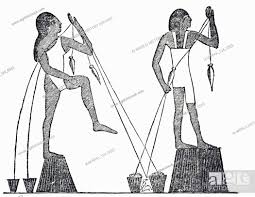
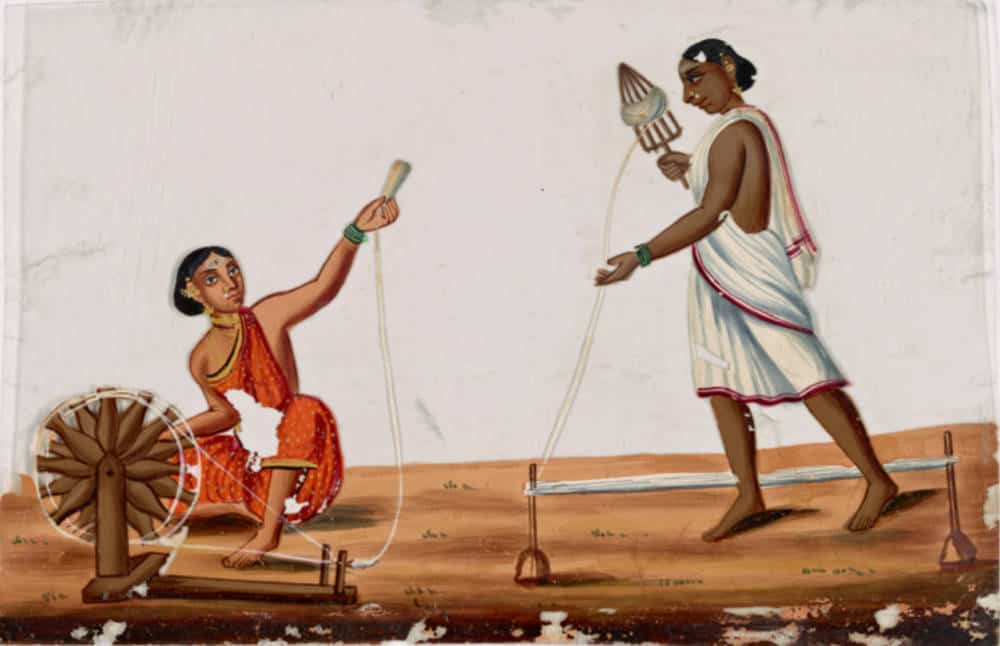
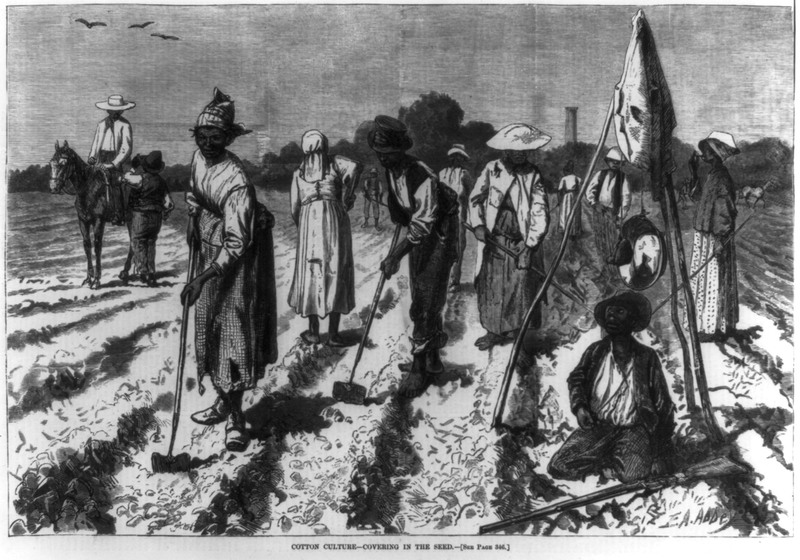
Cotton History in Pictures: from Africa, Asia and the Americas. Public archive images
There are some questions that we need to ask ourselves about the food we take in:
- What is FOOD anyway? Do we eat to live or live to eat? Your response to that might depend upon where in the world you are and who you are.
- How sure are you of your next meal? Are you responsible for its processing and preparation or is it going to be delivered to you?
- How are you even going to take in your food: is it in your mouth or through your skin; your ears, your nostrils or through your eyes?
- Is it cooked, processed or raw? Is it the real thing or a manufactured fake?
- How did you bring it home? Was it carried in your basket, a sack or shopping trolley?
- Perhaps it was not you who had to go out and fetch it?
- How did it reach these shores? By ship? Aeroplane? Or across an expanse of land?
- What are the implications of your answers to these questions? What does it say about your capacity to be nourished or to, in turn, nourish?
Why it matters to you
Food stories excite the imagination of everyone who eats. What can your imagination tell you about Food Futurities?

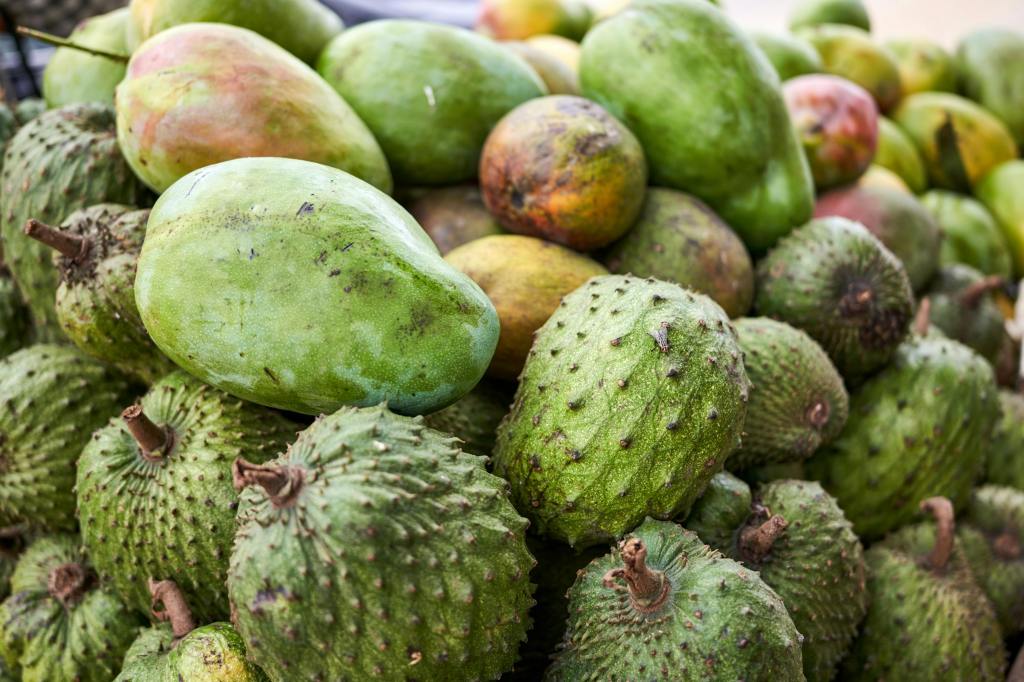

Ackee n’ Sal’fish, Mango and Soursop, Patty: (gabre-cameron, messina and snappr: Unsplash, Pexels)
Participating in this workshop will connect you to different ways of looking at how the particular, historical routes/roots of Britain link it to its present-day impact on culture, tastes, health, community, economics and oppression across the worlds.
Do you define your experience with food
in the world or has the world defined it for you?
What are the relationships that people across the worlds, or of particular regions, have with food and what has shaped it? What continues to shape it?
How does the experience of economic marginality affect these relationships? How does culture shape these relationships? Is it food itself that is shaping our cultures or our levels of economic marginalisation?
Come prepared to be fully immersed in sound, tastes, touch and smell and to enter into further dimension of time as we take ourselves back to one of the most critical journeys that the food we eat has undergone and we begin to understand the nature of global Food systems.
 Community Centred Knowledge